
Good Food, Great Fun and New Friendships
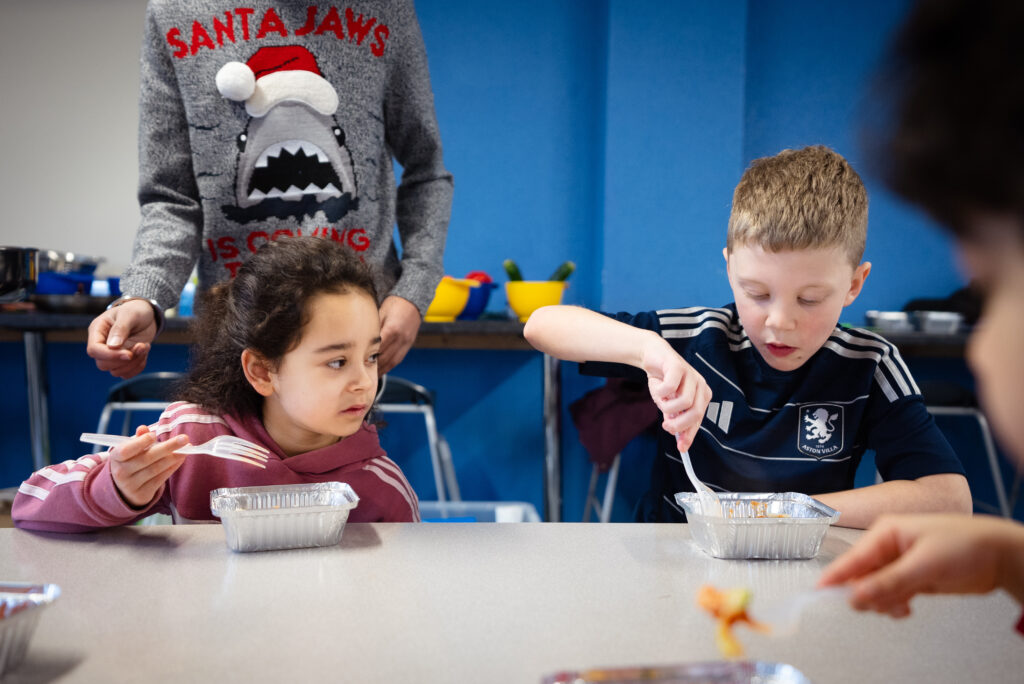
A Father’s Child Services CIC (AFCS) delivered a five-week Summer 2026 Holiday Activities and Food (HAF) pilot at Consortium Club in Birmingham, expanding its usual provision from three days a week to five days a week. Supported by funding from Feeding Britain and the National Lottery Youth Hub, the programme aimed to provide children with nutritious meals, enriching activities and a safe, inclusive environment.
Key achievements
Extended provision: The pilot ran five days a week for five weeks, providing breakfast, hot lunch and an afternoon snack each day.
Inclusive support: The programme supported children with a range of additional needs, including autism, ADHD, hearing impairment and other health conditions.
Food and nutrition: Cooking activities helped children explore different foods, develop confidence around eating and learn practical skills. AFCS also registered as a food business and achieved a five-star food hygiene rating.
Learning through activities: Cooking sessions incorporated maths, reading, writing, recipe-following, teamwork and social interaction. Staff identified children who could benefit from additional learning support and signposted families to relevant services.
Child-led provision: Young people helped create a calming corner, shape activities and personalise their environment. AFCS received a Bronze SEND Co-production Award and is working towards Silver.
Culture and enrichment: Children took part in museum visits, workshops, outdoor activities, music, creative projects and community events.
Impact on children and families
The programme focused on personalised, trauma-informed support, allowing staff to respond to individual needs and build positive relationships. Case studies highlighted how food-based activities encouraged children to try different foods, while inclusive cooking sessions supported learning and social development. Staff also worked with parents to identify needs and connect families with additional support.
Key learning and legacy
AFCS found that a smaller, person-centred HAF model enabled staff to provide more individual attention, support siblings together and respond to children’s emotional, social and practical needs. The organisation also highlighted the importance of flexible food provision, staff training, safeguarding and making use of free local activities and resources.
Overall, the pilot demonstrated how combining nutritious food, inclusive activities and tailored support can help children build confidence, develop life skills and form friendships during the school holidays. AFCS hopes its experience will help other organisations deliver sensitive, inclusive and effective HAF provision.